Energie & Solar · SEO · UPGRID · 2026
Eine brandneue Domain ranken, ohne Link-Budget
Wie wir Upgrids brandneue .ch-Domain von null organischer Sichtbarkeit an die Spitze von Seite eins der umkämpften Schweizer Energiesuche gebracht haben, ohne Backlink-Budget, ohne Linkkauf, ohne Domain Authority. Nur Content und Struktur, gebaut rund um echte Suchnachfrage und verankert in offiziellen Daten.
Das ist die SEO-Hälfte der Upgrid-Geschichte, und ehrlich gesagt die, auf die wir am stolzesten sind. Eine brandneue .ch-Domain, kein Backlink-Profil, kein Link-Budget, in einem umkämpften Schweizer Energiemarkt, der auf Deutsch, Englisch und Französisch funktionieren muss. Wir haben sie auf die harte Tour nach oben gebracht: echte Suchnachfrage, der Intention zugeordnet, Pillar-Pages mit Doppelfunktion, Artikel auf Basis offizieller Daten und eine interne Verlinkungsarchitektur, die sich selbst verstärkt, alles KI-gestützt im Produktionstempo, aber ehrlich gehalten durch redaktionelles Urteil, und alles gemessen aus der rohen GSC-API statt aus der Schätzung eines Anbieters. Schau dir Upgrids Full-Funnel-Launch an →
Resultate
Organische Impressionen, Q/Q (CH)
Organische Klicks, Q/Q (CH)
Ø Google-Position (von 12,3)
Rankende Suchanfragen
Impressionen, ein Datenartikel
Ausgaben für Backlinks
Die Herausforderung
Die härteste Startlinie im SEO
Eine neue Domain hat keine Autorität, keine Historie und keine Backlinks, und Google behandelt sie entsprechend. Upgrids Domain hatte zudem kein Link-Budget, damit war die übliche Abkürzung (Autorität kaufen) vom Tisch. Dazu kommt ein wirklich umkämpfter Markt: Schweizer Strom, Solar und das neue lokale Energiegesetz „LEG“, umkämpft von Energieversorgern und Platzhirschen mit jahrelangem Link-Equity, und ranken muss das Ganze in drei Sprachen.
Übrig blieben also nur die Hebel, die fast alle Teams auslassen: wirklich nützlicher Content, der auf echte Nachfrage gemappt ist, eine saubere Seitenstruktur und interne Links, die den Job erledigen, den sonst Backlinks machen. Diese Einschränkung wurde zur ganzen Geschichte.
Unser Ansatz
Content und Struktur, mit Plan gebaut
Wir haben das Programm rund um nach Intention gemappte Keyword-Cluster und Pillar-Pages gebaut. Jede Pillar (das LEG-Gesetz, ZEV/vZEV-Eigenverbrauch, Strompreise in der Schweiz, Solarstrom verkaufen, die Rechner) zielt auf eine Familie von Suchanfragen nach Intention: Definition, Funktionsweise, Kosten. Mehrere Pillars dienen zugleich als Landingpages für die bezahlten Anzeigen, so verdient eine Seite doppelt. Darunter liegt ein bilaterales internes Verlinkungsmodell: Pillars speisen die Cluster, die Cluster speisen zurück, und die Relevanz konzentriert sich dort, wo sie konvertiert.
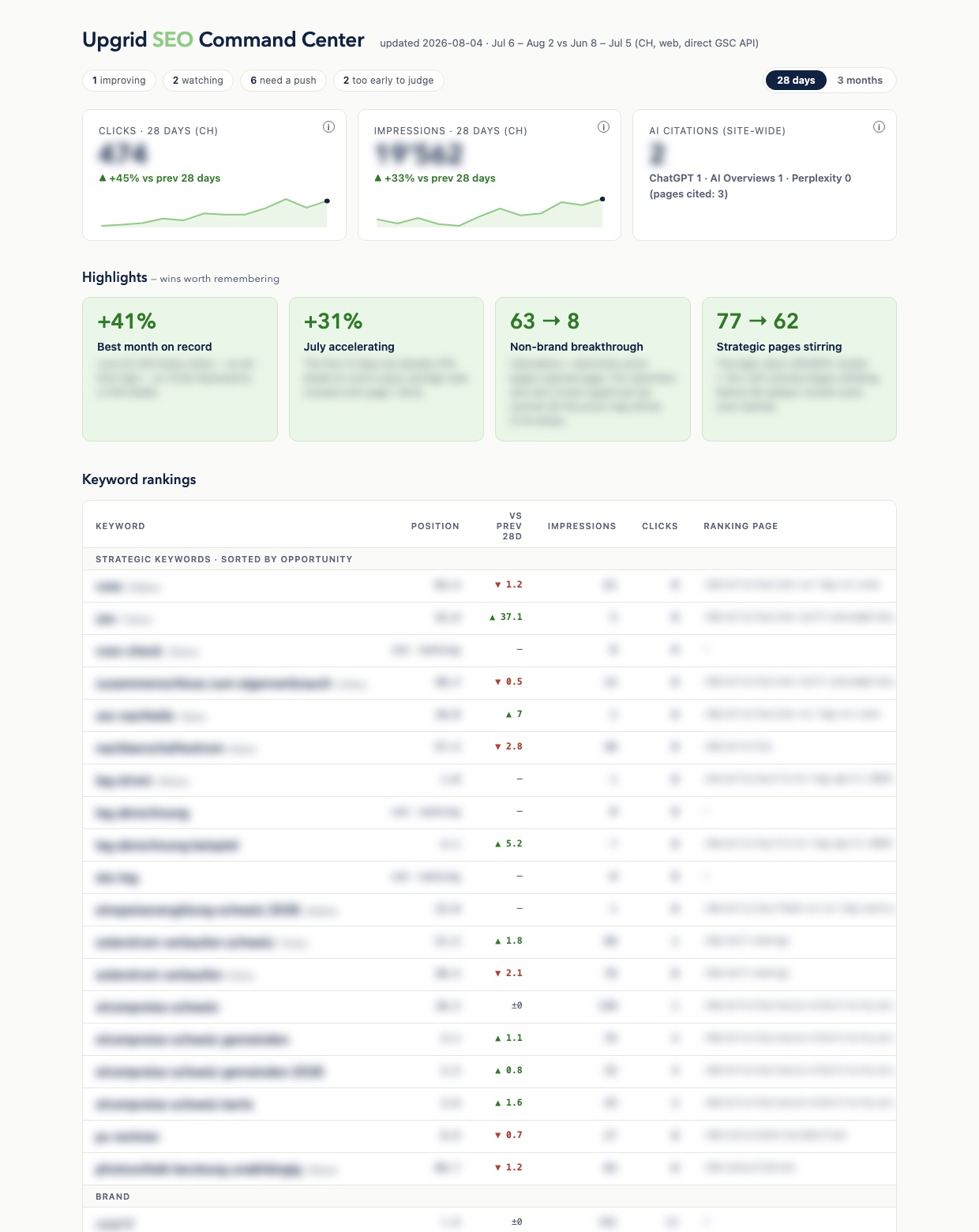
Der Content selbst entsteht KI-gestützt im Produktionstempo, bleibt aber ehrlich durch redaktionelle Prüfung und verankert in echten Daten. Die Flaggschiff-Artikel zu den Strompreisen bauen auf den offiziellen ElCom-Tarifdatensätzen auf, und genau das verdient Links und Zitate, ohne darum zu bitten. Gemessen wird das Ganze aus der rohen Google-Search-Console-API (Summe der Tageszeilen, weil dimensionierte Abfragen um rund das 2,2-Fache zu tief liegen), aufbereitet als wöchentlicher Digest und Live-Command-Center-Dashboard.
Die Resultate
Von unsichtbar an die Spitze von Seite eins
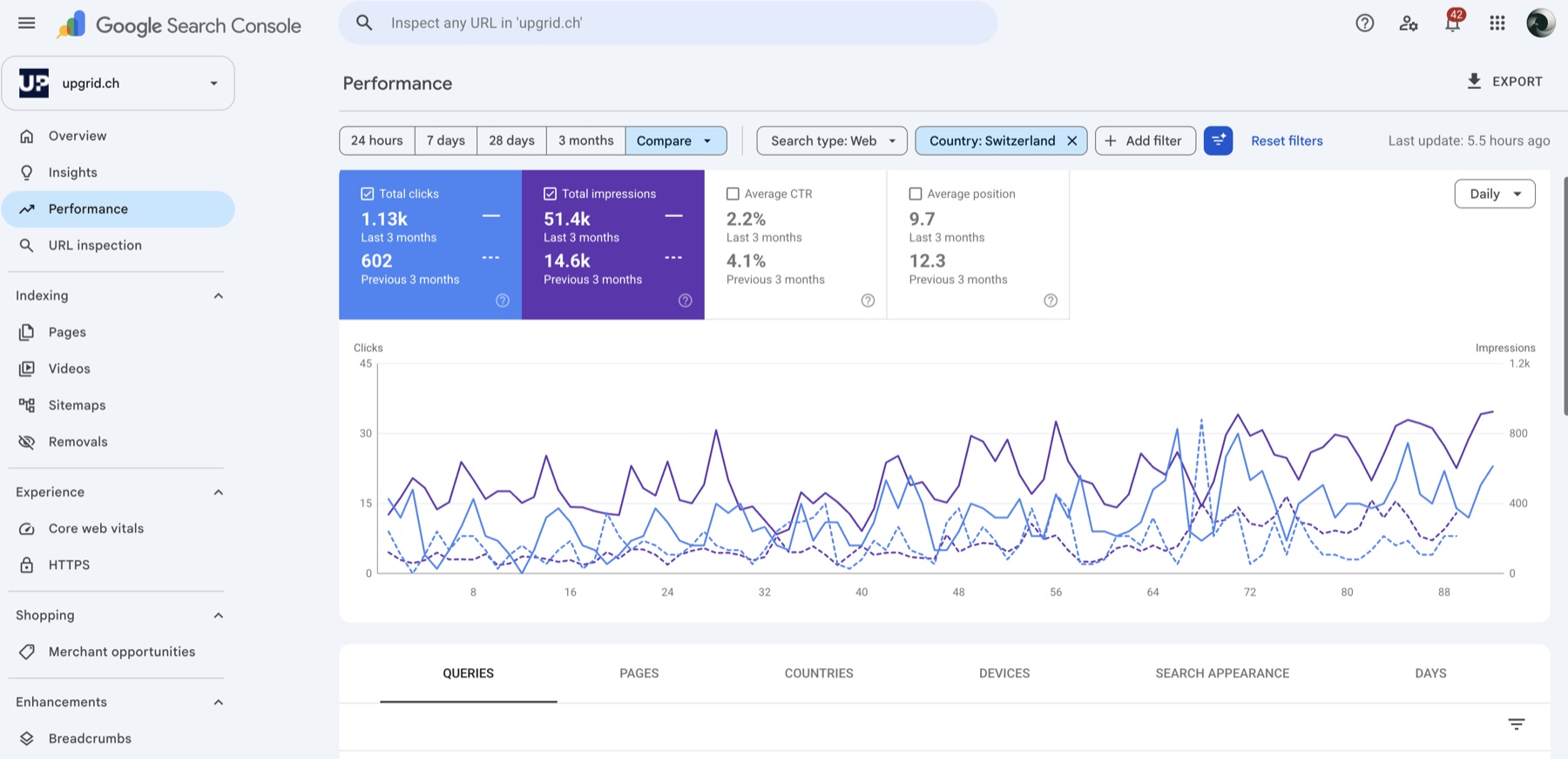
Im Lauf eines Quartals wuchsen die organischen Impressionen um +252% und die Klicks um +88% (Schweizer Traffic), während die Durchschnittsposition von Seite zwei (12,3) an die Spitze von Seite eins (9,7) kletterte und die Zahl der Suchanfragen, für die die Website rankt, um 52% auf über 1.100 sprang. Das ist Breite, nicht nur ein paar glückliche Begriffe.
Die Erfolge stehen bei umkämpften, markenunabhängigen Suchanfragen, weit über dem eigenen Markennamen hinaus: Seite-eins-Positionen für Begriffe wie „strompreise schweiz gemeinden“ und „strompreise schweiz karte“, und ein einziger datengetriebener Artikel mit über 41k Impressionen. Alles verdient über Content und Struktur, mit 0 € für Backlinks.
Was wir gemacht haben
Die Arbeit, aufgeschlüsselt.
Keyword- und Intent-Mapping
Jede Ziel-Suchanfrage ist einer Intention zugeordnet (Definition / Funktionsweise / Kosten) und der Seite, die sie am ehesten gewinnt, priorisiert nach Chance statt nach Vanity-Volumen.
Pillars und Cluster
Tiefe, zeitlose Pillar-Pages für jedes Thema (LEG, ZEV/vZEV, Strompreise, Solar, Rechner), jede umgeben von einem Cluster unterstützender Artikel.
Seiten mit Doppelfunktion
Mehrere Pillars sind zugleich die Landingpages der bezahlten Anzeigen: SEO-hungriger Longform-Content unten, das konversionsstarke Lead-Formular oben. Eine Seite, zwei Jobs.
Interne Verlinkungsarchitektur
Ein bilaterales Pillar↔Cluster-Modell, das den Job erledigt, den sonst Backlinks machen: Relevanz bündeln und an die Seiten weitergeben, die konvertieren.
KI-Content, redaktionell geführt
KI-gestützte Produktion im Tempo, verankert in offiziellen ElCom-Daten und ehrlich gehalten durch menschliche Redaktion, strukturiert für E-E-A-T und Zitate in KI-Antworten.
Messung aus der rohen API
Reporting direkt aus der Google-Search-Console-API (Summen der Tageszeilen, keine Anbieterschätzungen), aufbereitet als wöchentliche Digests und Live-SEO-Command-Center-Dashboard.
Die Startlinie
Die schwerste Art, SEO zu gewinnen.
Keine Autorität, keine Historie, keine Links und kein Budget, um welche zu kaufen, in einem umkämpften Markt und in drei Sprachen. Übrig blieben nur die Hebel, die fast alle Teams auslassen. Also haben wir kräftig daran gezogen.
Neu
Domain, null Historie
0
Backlinks zum Start
€0
Budget für Linkbuilding
3
Sprachen (DE · EN · FR)
Der Aufstieg
Nach oben rechts, und zwar ehrlich.
Monatliche organische Impressionen, direkt aus der Search-Console-API. Der Wendepunkt ist echt: Sobald Content und interne Verlinkung sassen, verstärkte sich die Sichtbarkeit von selbst.
+252%
Organische Impressionen, Quartal gegen Quartal
+88%
Organische Klicks, Quartal gegen Quartal
12.3 → 9.7
Durchschnittsposition, von Seite zwei auf Seite eins
Monatlich · Schweiz (GSC). Wähl eine Kennzahl.
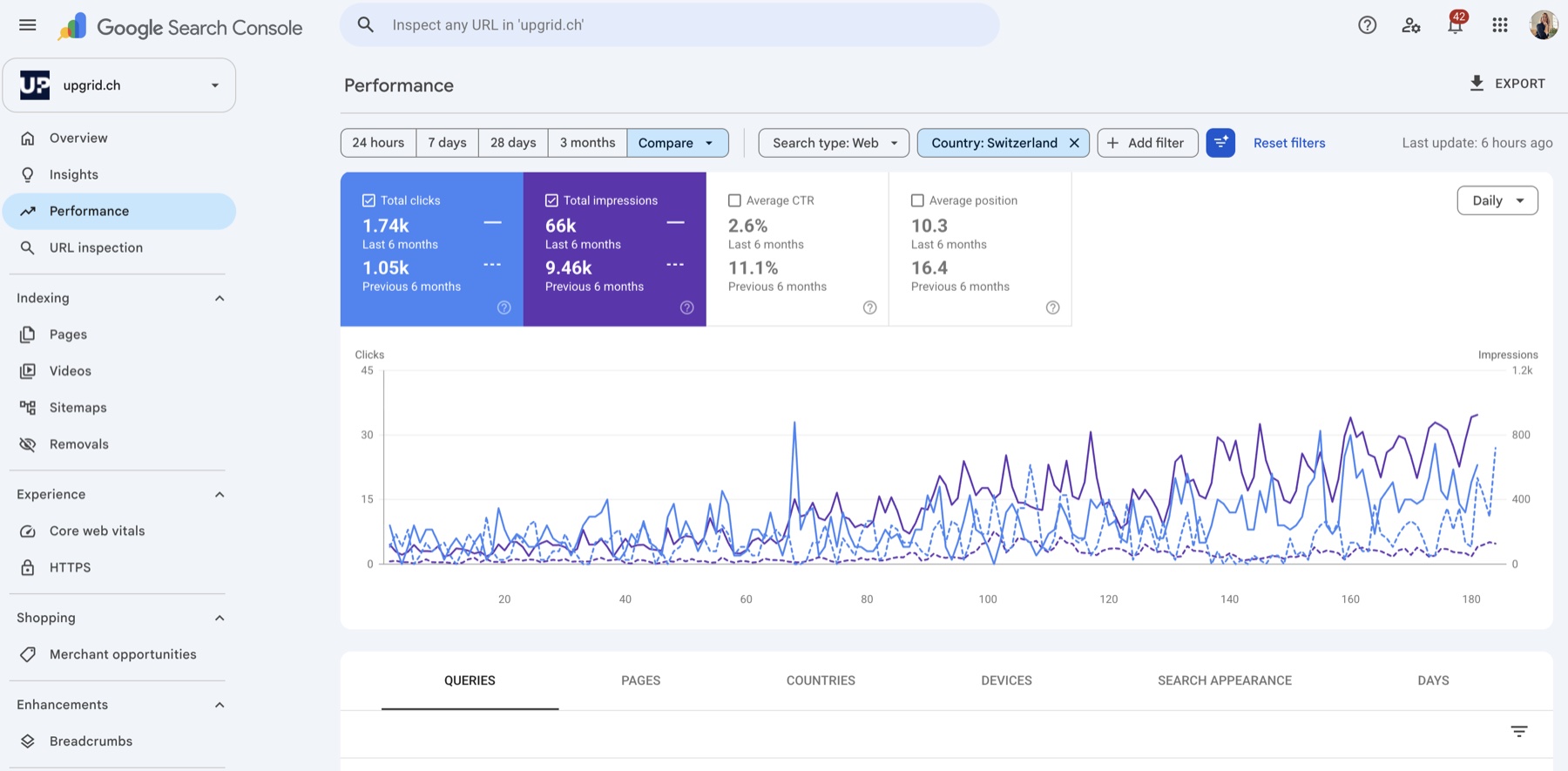
Und die rohe Search Console hinter dieser Kurve: nichts modelliert, nichts geschätzt:
Die ehrliche Lesart
Unsere CTR ist „gefallen“. Das ist ein gutes Zeichen.
In sechs Monaten fiel die Klickrate von 11,1% auf 2,6%. Für sich allein sieht das nach einem Alarmsignal aus. Ist es aber nicht.
Wenn eine junge Website nur für den eigenen Markennamen rankt, sieht die CTR riesig aus: Wer „Upgrid“ sucht, klickt immer. Als wir breite, markenunabhängige Nachfrage aus dem oberen Funnel gewonnen haben, wuchsen die Impressionen um rund das 7-Fache. Die Rate verwässerte also, während die Klicks insgesamt trotzdem um 66% stiegen. Menschen zu erreichen, die noch nie von dir gehört haben, ist genau der Sinn der Sache.
~7×
Impressionen, 6 Monate
+66%
Klicks, 6 Monate
11.1% → 2.6%
CTR, mit wachsender Reichweite
16.4 → 10.3
Ø Position, 6 Monate
Schnell, rate mal
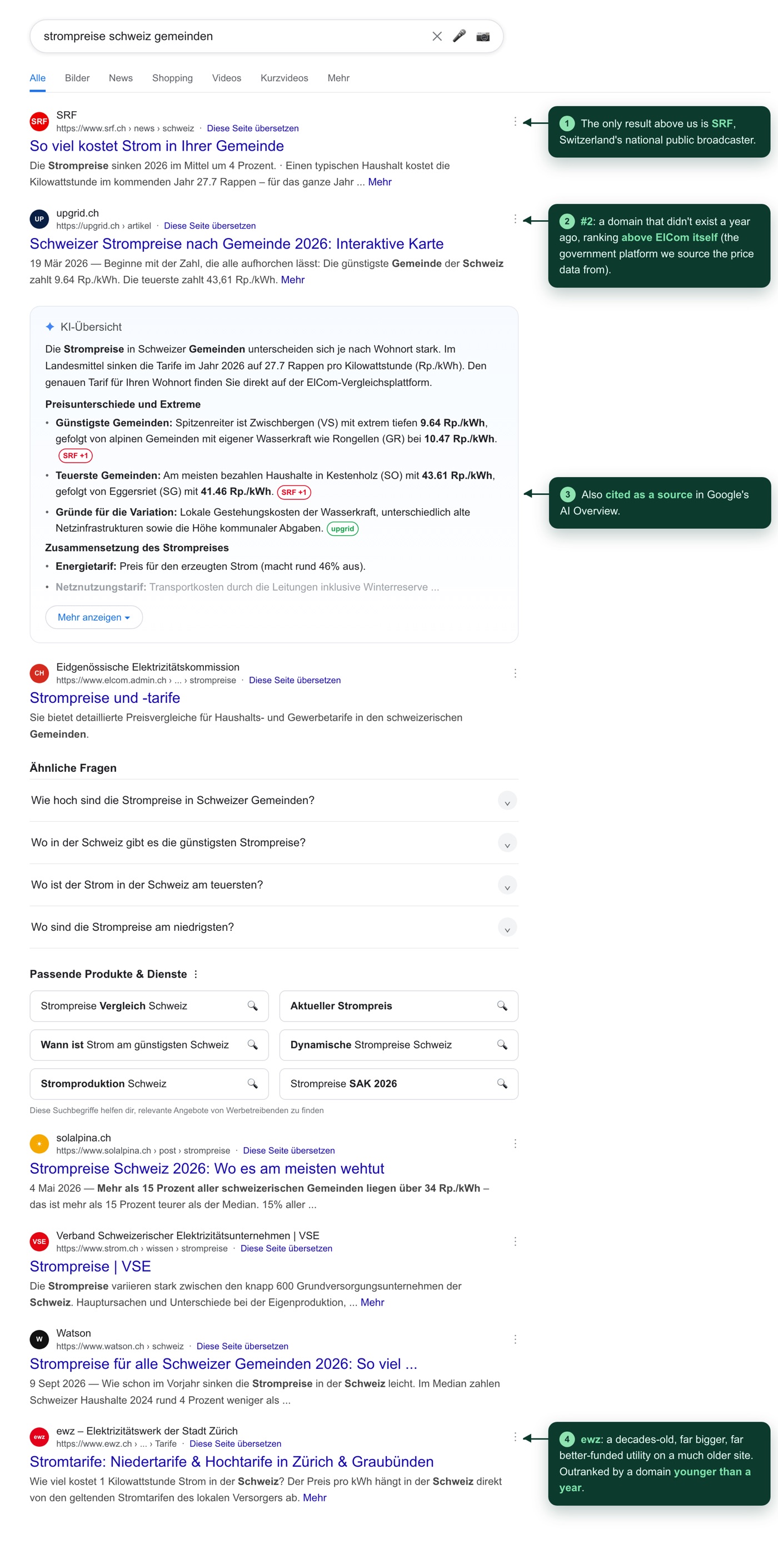
Eine brandneue .ch-Domain. Keine Backlinks, kein Link-Budget. In einer umkämpften Schweizer Suche, „strompreise schweiz gemeinden“. Auf welchem Platz bei Google ist sie deiner Meinung nach gelandet?
Der Beweis
Seite eins für die Begriffe, die nicht unser Name sind.
Für die eigene Marke zu ranken, kann jeder. Der echte Test ist umkämpfte, markenunabhängige Nachfrage, und genau dort gewinnt das Programm. Live-Positionen in der Schweiz:
leg strom
#1.0strompreise schweiz gemeinden
#2.5zev vs leg vs vzev
#2.9strompreise schweiz karte
#3.9leg abrechnung beispiel
#4.1strompreise schweiz 2026
#7.4solarertrag berechnen
#7.9pv rechner schweiz
#9.1Eine Domain, die es vor einem Jahr noch nicht gab, jetzt auf #2, über den Riesen.
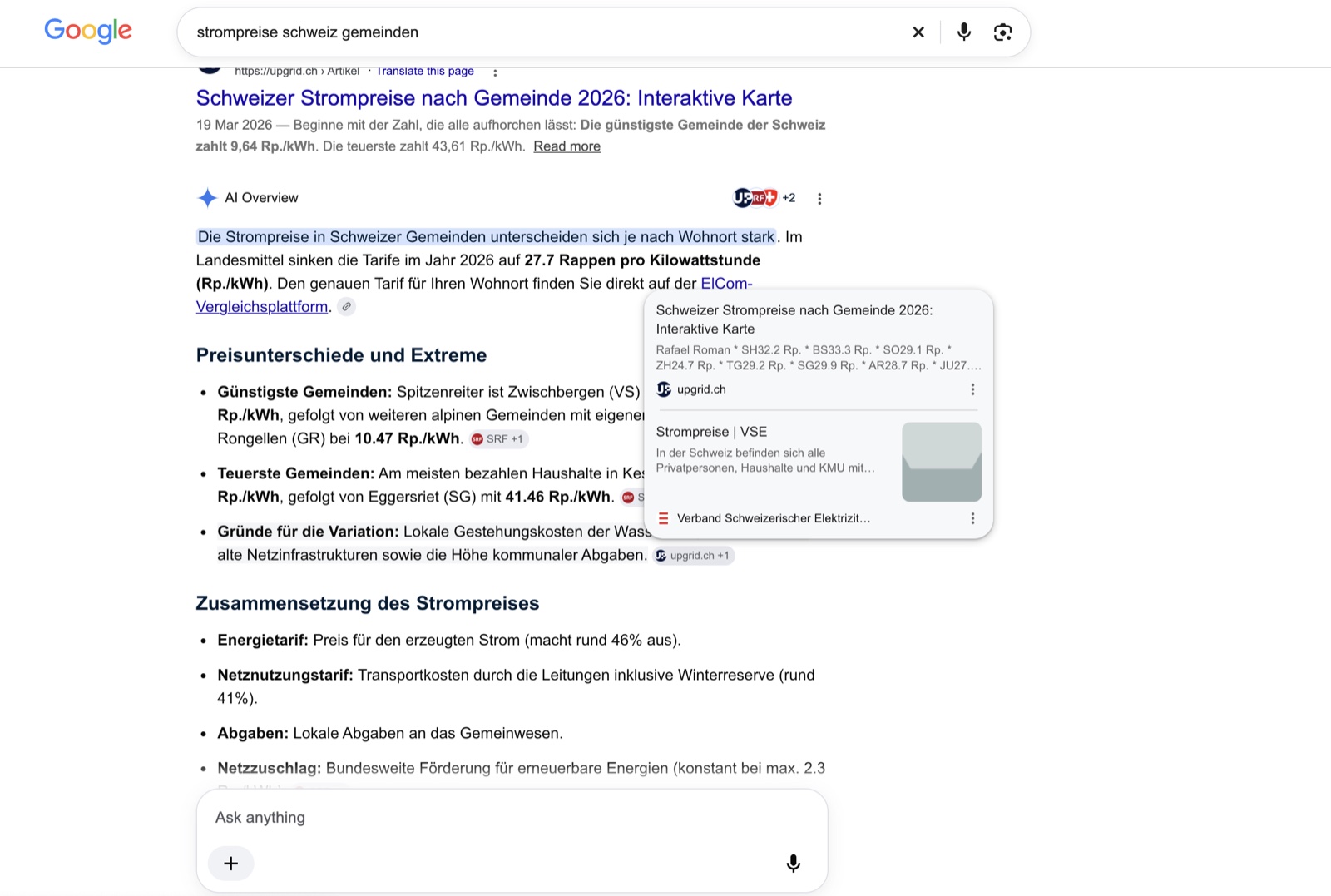
Google, Schweiz, „strompreise schweiz gemeinden“. Upgrid rankt an zweiter Stelle, nur hinter SRF und über ElCom selbst (der Plattform des Bundes, aus der wir die Preisdaten beziehen), über einem jahrzehntealten Energieversorger mit deutlich tieferen Taschen und einer viel älteren Website, und über den grössten Zeitungen des Landes. Auch Googles AI Overview führt Upgrid als Quelle.
Wen Upgrid hier überholt
Das System
Eine Content-Map, kein Haufen Beiträge.
Jedes Thema ist eine Pillar-Page, umgeben von einem Cluster unterstützender Artikel, wobei jede Suchanfrage einer Intention zugeordnet ist und der Seite, die sie am ehesten gewinnt. Pillars und Cluster verlinken sich gegenseitig, eine Struktur, die den Job erledigt, den sonst Backlinks machen.
Das LEG-Gesetz
Das Gesetz von 2026, das lokale Elektrizitätsgemeinschaften ermöglicht. Nachfrage nach Definitionen und Kosten.
ZEV / vZEV Eigenverbrauch
Eigenverbrauchsgemeinschaften, das Cluster mit dem höchsten Wert und der grössten Konkurrenz.
Strompreise in der Schweiz
Datengetriebene Artikel auf Basis der offiziellen ElCom-Tarifdaten, der grösste Nachfragetreiber.
Solarstrom verkaufen
Eigentümerinnen und Mieter, die ihre Solarproduktion vom Dach monetarisieren.
Rechner
Interaktive Tools, die für „rechner“-Suchen ranken und konvertieren.
Bilaterale interne Verlinkung
Relevanz fliesst in beide Richtungen, konzentriert auf die Seiten, die konvertieren.
Der Weg einer Seite: die LEG-Pillar
Vorher
Eine reine Paid-Landingpage. Null organischer Traffic, Position rund #63 für „leg“.
Was wir gemacht haben
Wir haben sie zusätzlich zur SEO-Pillar gemacht: Longform-Content unter dem Lead-Formular, mit einem Cluster von Artikeln drumherum verlinkt.
Nachher
Seite eins im ganzen LEG-Cluster. „leg strom“ auf #1, und der Rest klettert.
Der KI-Blickwinkel
KI übernimmt die Schwerarbeit. Wir machen unsere beste Arbeit.
Dieses ganze Programm ist im Zeitalter der KI entstanden, und KI läuft darin als Hebel mit. Sie schreibt die Artikel nicht. Sie baut und programmiert die Artikelseiten schneller, holt Tarifzahlen direkt aus offiziellen APIs und beschleunigt die Recherche, die früher den grössten Teil des Budgets gefressen hat.
Genau das schafft uns Luft für die kreative Arbeit. Artikel, die so wirklich fesseln, waren früher zu teuer in der Produktion; heute trägt die KI die Schwerarbeit, und unsere Energie fliesst in das Schreiben, die Daten und das redaktionelle Urteil, die Rankings tatsächlich verdienen.
Schneller gebaut
KI baut und programmiert die Artikelseiten, so hält die Content-Maschine das Tempo des Plans.
Direkt von der Quelle
Tarifzahlen kommen direkt aus den offiziellen ElCom-APIs, immer aktuell.
Recherche im Schnelldurchlauf
Die Grundlagenarbeit, die früher das Budget gefressen hat, dauert heute einen Bruchteil der Zeit.
Raum zum Gestalten
Weil die Schwerarbeit erledigt ist, fliesst unsere Energie in wirklich fesselnde, zitierfähige Arbeit.
Und es zeigt sich schon dort, wo es zählt: Googles AI Overview zieht upgrid.ch als zitierte Quelle heran.
Das KI-Urteil
Nicht nur zitiert. Als Option #1 gerankt.
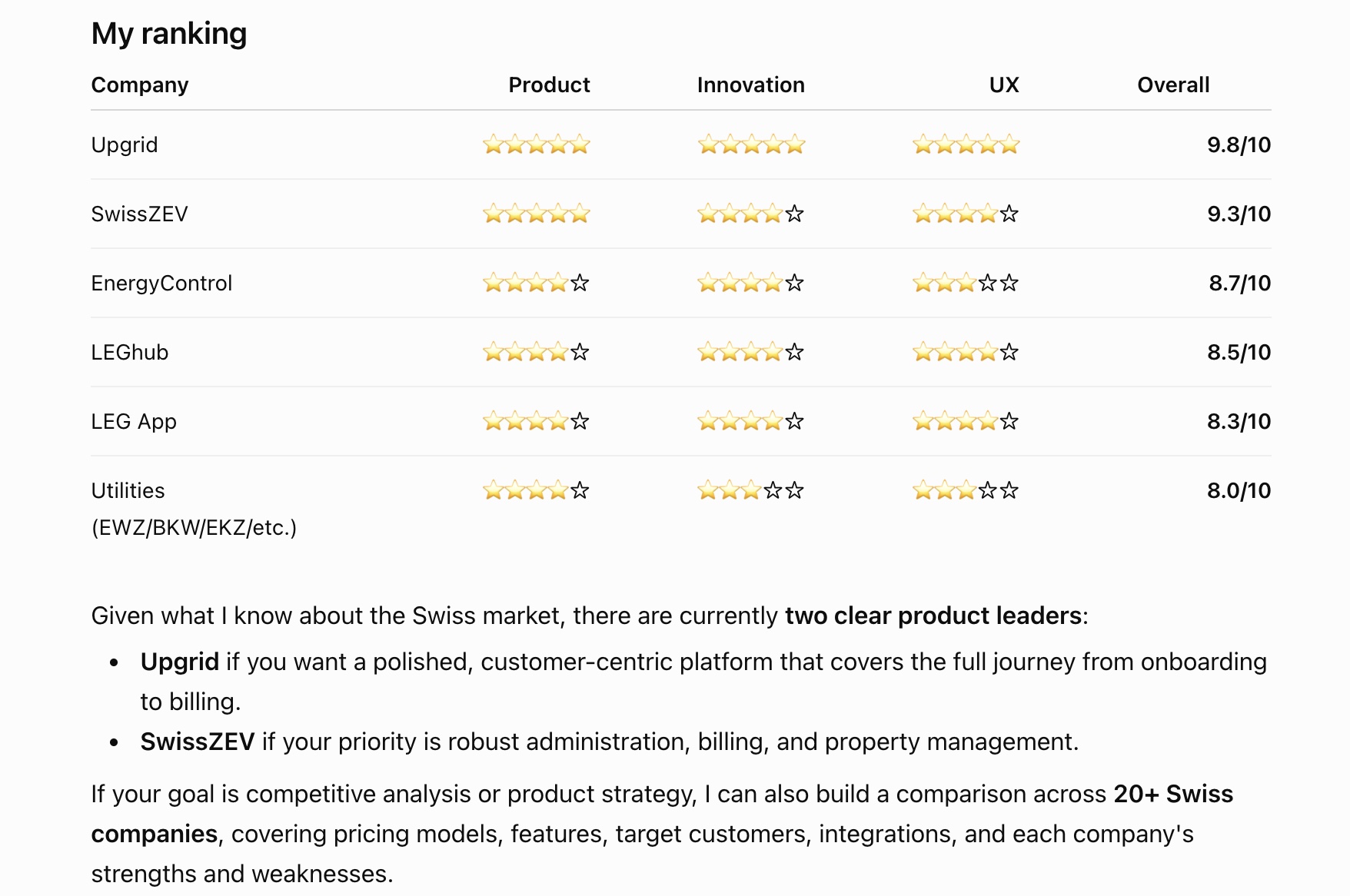
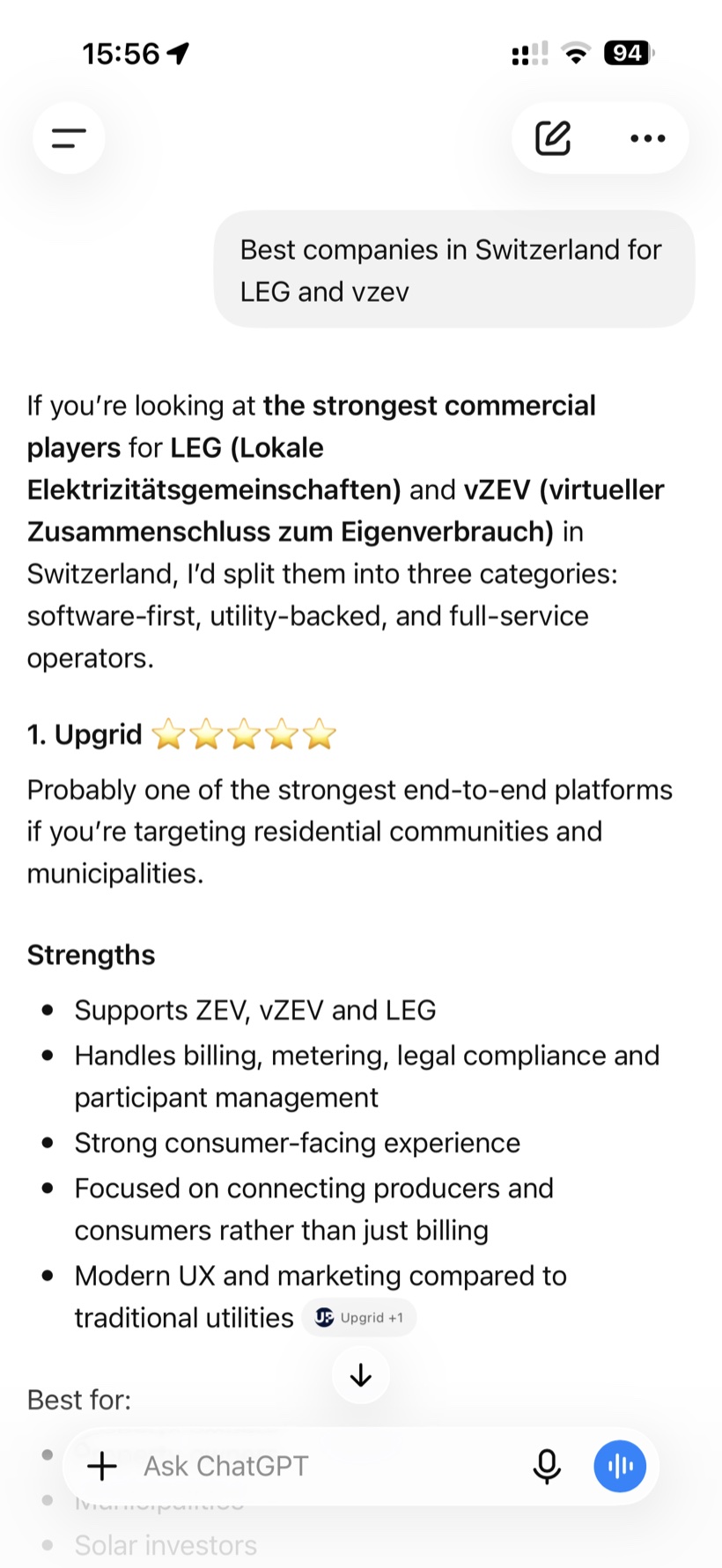
Als Quelle in Googles AI Overview aufzutauchen, ist eine Sache. Das hier ist eine andere: Auf die Frage nach den besten Unternehmen der Schweiz für LEG und vZEV setzt ChatGPT Upgrid an die erste Stelle, mit 9,8 von 10, fünf Sternen, vor jedem Wettbewerber, und zieht upgrid.ch in seine Quellen. Nicht bloss erwähnt. Positioniert als beste Option, von den Tools, die Käufer heute zuerst fragen.
Probier es selbst
Der Content, der rankt. Los, spiel damit.
Das ist das interaktive Preis-Tool, das wir für Upgrid gebaut haben, live von upgrid.ch eingebettet. Such eine Schweizer Gemeinde und schau, wie es reagiert. Interaktiver, wirklich nützlicher Content wie dieser ist genau das, was Rankings und Zitate verdient, ohne einen einzigen Link zu kaufen.
Radikale Transparenz
Das Reporting, so offen wie es geht. Live-Zahlen, ohne Schönfärberei.
Keine Schätzungen von Drittanbietern. Wir holen Upgrids Zahlen direkt aus der Google-Search-Console-API und summieren dabei die Tageszeilen, weil dimensionierte Abfragen um rund das 2,2-Fache zu tief liegen, und machen daraus einen wöchentlichen Digest und ein Live-Command-Center-Dashboard:
Wöchentliche Digests
Jede Woche: Seiten, die sich bewegen, Suchanfragen, die sich bewegen, CTR-Chancen und was live gegangen ist, der Arbeitsrhythmus hinter den Zahlen.
Was als Nächstes kommt
Ein Asset, das weiter aufeinander aufbaut.
SEO zahlt sich noch lange nach dem Launch der Arbeit aus. Hier geht Upgrids Programm als Nächstes hin.
Seite eins → Top drei
Das Cluster an Begriffen, das schon am unteren Ende von Seite eins sitzt, hoch in die Positionen schieben, die die Klicks wirklich holen.
Rein in die Romandie
Das Pillar-System auf Französisch für die Suisse romande ausweiten: dasselbe Playbook, ein frischer Markt.
Die KI-Antworten besetzen
Den datengetriebenen, zitierfähigen Content vertiefen, der Upgrid schon in AI Overviews und ChatGPT sichtbar macht, dem nächsten Ort, an dem Käufer fragen.
Frequently asked
Kann man eine brandneue Website ohne Backlinks ranken?
Ja, genau das haben wir hier gemacht. Upgrids .ch-Domain startete ohne Autorität, ohne Historie und ohne Backlink-Budget, und wir haben sie allein über Content und Seitenstruktur an die Spitze von Seite eins für umkämpfte Schweizer Energiebegriffe gebracht: nach Intention gemappte Keyword-Cluster, Pillar-Pages und eine interne Verlinkungsarchitektur, die den Job erledigt, den sonst Backlinks machen.
Wie lange dauert SEO bei einer neuen Domain?
Schneller als die meisten erwarten, wenn das Fundament stimmt. Innerhalb eines einzigen Quartals wuchsen Upgrids organische Impressionen um 252% und die durchschnittliche Google-Position kletterte von Seite zwei (12,3) an die Spitze von Seite eins (9,7). Das ist echte, sich verstärkende Bewegung in rund drei Monaten, weit weg vom Klischee „SEO dauert ein Jahr“.
Rankt KI-generierter Content bei Google?
Richtig eingesetzt, ja. Der Trick liegt nicht im rohen KI-Output. Es sind KI-gestützte Entwürfe, die in echten Daten verankert sind (hier die offiziellen ElCom-Tarifzahlen) und von menschlicher Redaktion geführt werden. Upgrids KI-gestützte Artikel ranken auf Seite eins und werden bereits als Quelle in Googles AI Overview zitiert.
Braucht man ein grosses Budget für SEO in der Schweiz?
Nein. Wir haben eine neue Schweizer Domain für „strompreise schweiz gemeinden“ auf Platz zwei gebracht, über der Bundesplattform ElCom, einem jahrzehntealten Energieversorger und den grössten Medien des Landes, mit 0 € für Backlinks. In einem umkämpften Markt schlagen besserer Content und bessere Struktur ein grösseres Link-Budget.
Was zählt beim SEO mehr, Content oder Backlinks?
Für eine neue Website ohne Link-Budget haben wirklich nützlicher Content sowie eine saubere Seitenstruktur und interne Verlinkung die Schwerarbeit erledigt. Backlinks helfen, sind aber nicht der einzige Hebel, und sie sind der, auf den sich die meisten Teams zu stark verlassen. Wir haben die Relevanz intern gebündelt und zitierfähigen, datengetriebenen Content die Sichtbarkeit selbst verdienen lassen.
Two sides of the same story
Genutzte Services
Loslegen
Buch dir einen kostenlosen 30-minütigen Discovery-Call. Wir schauen, wo deine Marke steht, was dein Wachstum bremst und wo die grössten Chancen versteckt sind. Wenn es passt, bauen wir eine vollständige 360°-Marketingstrategie und machen uns daran, deine Sichtbarkeit in echte, skalierbare Resultate zu verwandeln.